

7 Top Benefits Families See From Preventive Dental Care Over 5 Years
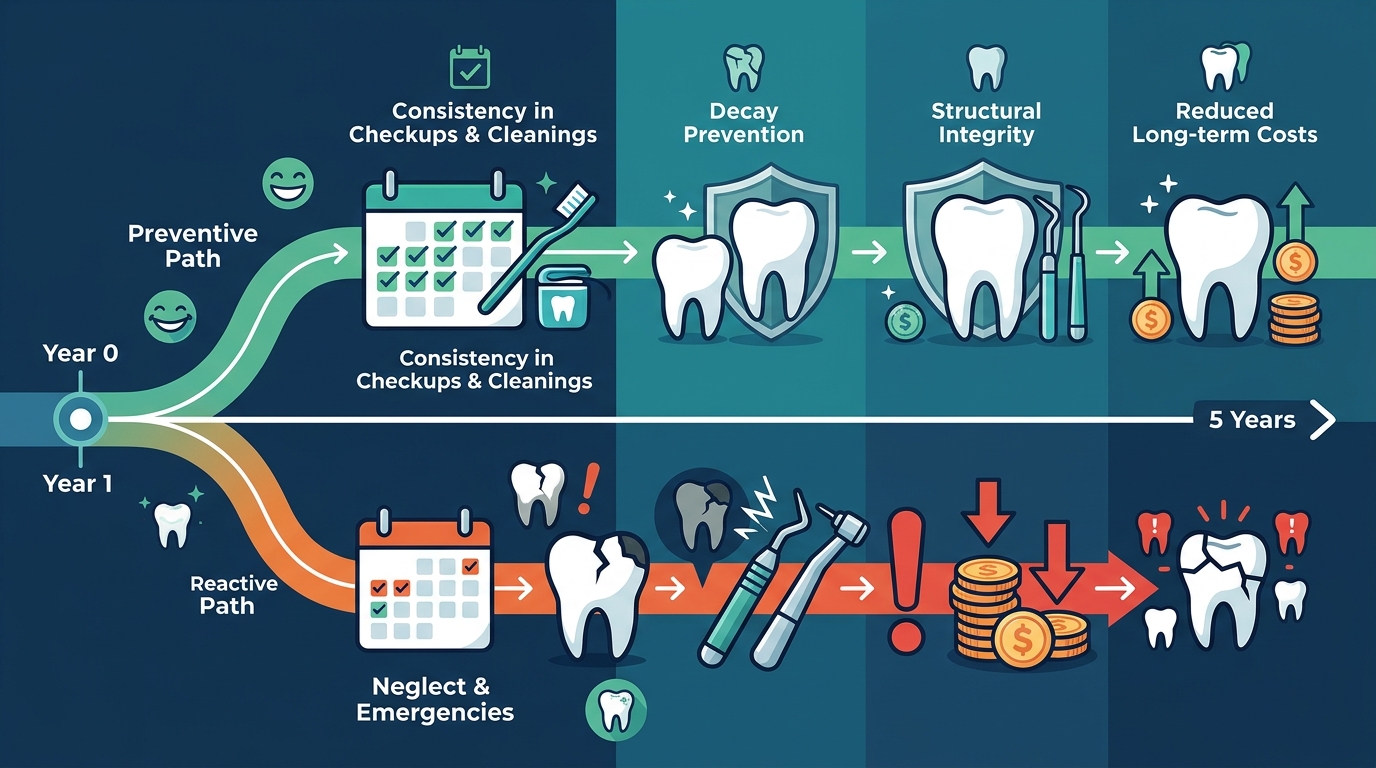
Consistent preventive dental care delivers measurable, long-term value for families. Over a five-year period, regular checkups and cleanings reduce the need for invasive procedures, lower overall treatment costs, and protect the structural integrity of both primary and permanent teeth. At Tooth Doc Family Dentistry in Herndon, VA, we focus on these tangible outcomes to help families maintain healthy smiles without the stress of emergency repairs.
1. Reduced Need for Invasive Restorative Procedures
Early detection prevents small issues from becoming major surgeries. Preventive care is the practice of identifying dental problems before they cause significant damage. When families commit to semi-annual exams, dentists can catch decay or gum inflammation at its earliest stages. This allows for simple fillings or professional cleanings instead of root canals or extractions.
2. Significant Long-Term Cost Savings
Preventive maintenance is far cheaper than emergency restorative work. Over five years, the cost of routine cleanings and exams is a fraction of the expense required to replace missing teeth or repair severe structural damage. By avoiding complex procedures, families preserve their dental insurance benefits and avoid large out-of-pocket bills. This financial predictability is a primary reason families choose a dedicated preventive care plan.
3. Preservation of Natural Tooth Structure
Keeping your natural teeth is the best long-term investment for oral health. Natural teeth are superior to any artificial replacement in terms of sensation and function. Preventive treatments like fluoride varnishes and sealants strengthen enamel and protect against decay. This approach ensures that the teeth your family has at the start of the five-year period remain intact and functional at the end.
4. Improved Oral Health for Children and Teens
Early habits established in childhood lead to lifelong dental health. Pediatric preventive care is the foundation of a healthy smile. Regular visits help children develop positive associations with the dental office and establish proper brushing and flossing routines. At Tooth Doc Family Dentistry, we use a gentle, educational approach to ensure kids understand the importance of their own oral hygiene.
5. Early Detection of Oral Cancer and Systemic Issues
Regular screenings can identify life-threatening conditions before symptoms appear. Oral cancer is often not detected until it has spread to other areas of the body, giving you a lower chance of beating the disease. Regular oral cancer screening during your semi-annual examination can catch the cancer before it has metastasized, allowing for a more conservative treatment regimen and improving your odds of survival from 60% to 90%. Dentists also monitor for signs of systemic health issues that may manifest in the mouth.
6. Maintenance of Aesthetic and Functional Confidence
Healthy teeth look better and function more effectively over time. Preventive care includes professional cleanings that remove stains and plaque buildup, keeping smiles bright. It also ensures that bite alignment remains stable, preventing jaw pain and difficulty chewing. Families who prioritize prevention report higher confidence in their smiles and fewer functional complaints over the five-year mark.
7. Streamlined Family Care in One Location
One dental home for all ages simplifies scheduling and care coordination. Managing appointments for multiple family members can be difficult. A family-focused practice allows parents to book slots for themselves and their children in the same visit. This efficiency ensures that no one falls behind on their preventive schedule, creating a unified approach to the whole family's oral health.
Choosing the Right Preventive Approach
Frequently Asked Questions
How often should families visit the dentist for preventive care?
Most families should visit every six months for a professional cleaning and exam. However, patients with specific risk factors, such as a history of gum disease or high cavity risk, may need to visit every three to four months. Your dentist will recommend a personalized schedule based on your oral health status.
Does preventive dental care cover cosmetic treatments?
Preventive care focuses on health, not aesthetics. While professional cleanings can improve the appearance of your teeth by removing stains, cosmetic procedures like whitening or veneers are typically not covered under preventive benefits. However, maintaining healthy teeth is the foundation for any successful cosmetic work.
Can children benefit from preventive care as early as age one?
Yes, the American Dental Association recommends a child's first dental visit by their first birthday. Early visits help establish a dental home, allow for early detection of issues like early childhood caries, and help parents learn how to care for their child's developing teeth.
What is the difference between preventive and restorative dentistry?
Preventive dentistry is the practice of stopping dental problems before they start, such as through cleanings and fluoride treatments. Restorative dentistry is the practice of repairing damage that has already occurred, such as through fillings, crowns, or implants. Preventive care is always the preferred first step to avoid the need for restorative work.
How does preventive care impact dental insurance costs?
Preventive services are often covered at 100% by dental insurance plans, with no deductible. By focusing on prevention, you avoid the high out-of-pocket costs associated with restorative and major dental procedures, which typically have higher patient responsibility percentages.