

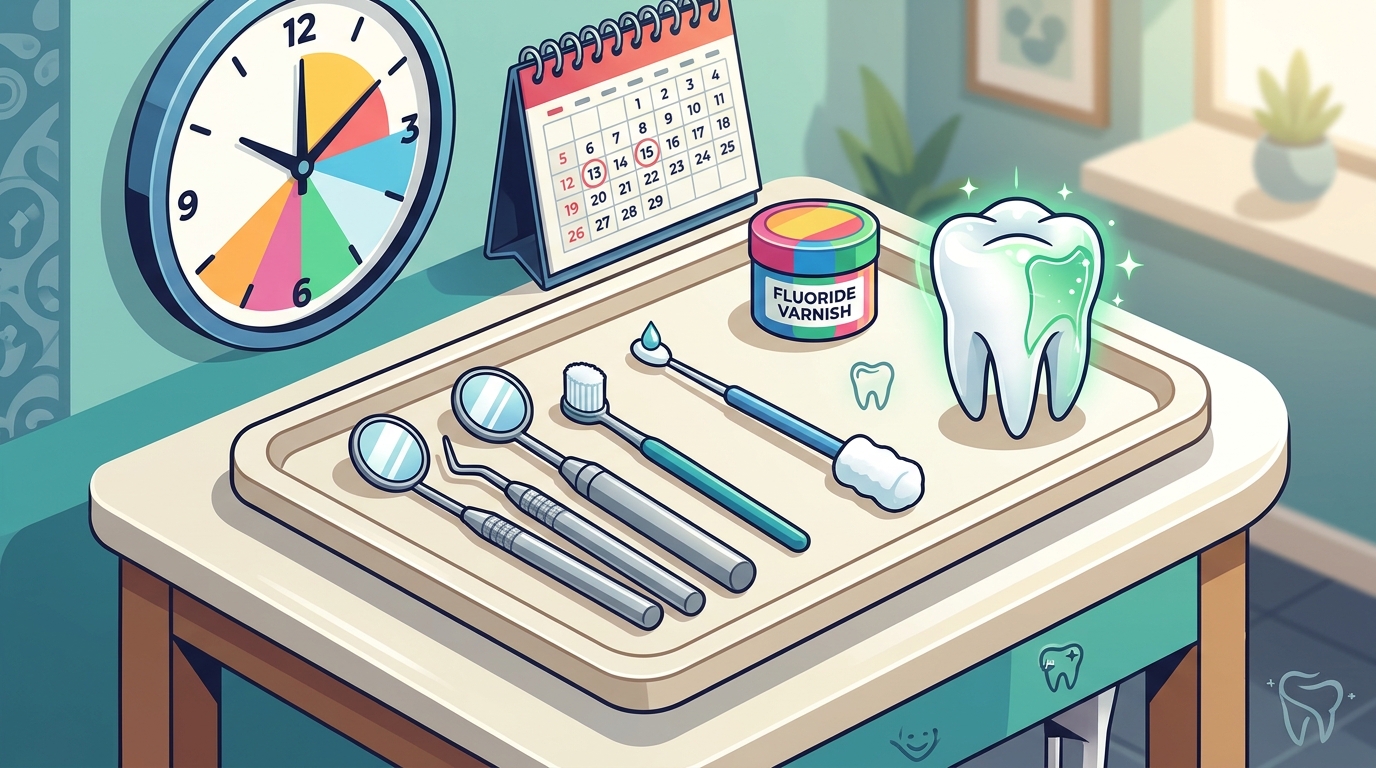
Children who fear the dentist often benefit from a tailored approach to preventive care that minimizes chair time and maximizes comfort. Fluoride varnish is a highly effective, non-invasive treatment that strengthens tooth enamel and reduces cavity risk without the need for drilling or extensive instrumentation. For families in Herndon, VA, understanding the optimal application frequency can help build trust and reduce anxiety during visits.
1. Standard Semi-Annual Schedule
Best for: Children with average cavity risk who tolerate routine visits well.
This is the most common schedule recommended by the American Dental Association for the general pediatric population. It involves applying fluoride varnish every six months, typically during routine cleanings and exams. For an anxious child, this predictable rhythm helps them associate the dental office with a manageable, low-stress event rather than a frequent source of fear. The varnish provides a sustained release of fluoride that protects teeth between visits.
2. Quarterly High-Risk Schedule
Best for: Children with a history of cavities or high sugar intake.
When a child is at high risk for caries, dentists often recommend quarterly applications, or every three months. This increased frequency ensures that the enamel remains saturated with fluoride, significantly lowering the likelihood of new decay. While more frequent visits might seem daunting for an anxious patient, the quick, painless nature of varnish application can actually build confidence. Knowing that their teeth are protected more often can reduce the child's fear of future painful procedures.
3. Monthly Intensive Schedule
Best for: Children with active decay or severe enamel erosion.
In cases where a child has multiple active cavities or significant enamel loss, a dentist may prescribe monthly fluoride varnish applications. This intensive phase is usually temporary, lasting three to six months, until the active decay is under control. For anxious children, this schedule is often paired with sedation dentistry or behavioral techniques to ensure comfort. The goal is to stabilize the oral environment quickly so that the child can return to a less frequent maintenance schedule.
4. Bi-Annual Maintenance Schedule
Best for: Older children with excellent oral hygiene and low risk.
Some older children, particularly those who brush diligently and have a low-sugar diet, may only need fluoride varnish once a year. This schedule is ideal for patients who have a strong positive relationship with their dentist and experience minimal anxiety. It reinforces the idea that dental care is a simple, annual check-up rather than a frequent medical intervention. This approach helps maintain the child's trust and keeps the dental experience positive.
5. As-Needed Emergency Schedule
Best for: Children who only visit the dentist when in pain.
For children who have not seen a dentist in years and are highly anxious, an as-needed schedule may be the only way to get them into the chair. In this scenario, fluoride varnish is applied during emergency visits to provide immediate protection while the dentist works to build a rapport. This approach avoids forcing a full preventive schedule on a terrified child. Over time, as trust is established, the dentist can gradually introduce more regular preventive visits.
6. School-Based Program Schedule
Best for: Children who are too anxious to visit a private practice.
Many schools in Northern Virginia offer fluoride varnish programs that apply the treatment in a familiar, non-clinical setting. This can be a crucial first step for children who are terrified of dental offices. The school environment is less intimidating, and the procedure is often done by a dental hygienist in a group setting. Once the child becomes comfortable with the sensation of varnish, they may be more willing to visit a private practice like Tooth Doc Family Dentistry for comprehensive care.
7. Home-Application Adjunct Schedule
Best for: Children who need extra protection between office visits.
While professional fluoride varnish is applied in the office, some dentists recommend high-fluoride toothpaste or at-home fluoride gels as an adjunct to office visits. This is not a replacement for professional varnish but a complementary strategy. For anxious children, knowing that they are taking an active role in protecting their teeth at home can empower them and reduce their fear of the dental chair. It also extends the protective benefits of the varnish applied during their last visit.
Choosing the Right Schedule
The best fluoride varnish schedule is one that balances clinical need with the child's emotional comfort. A dentist who specializes in gentle care, such as Dr. Imaney Ahmad at Tooth Doc Family Dentistry, can assess your child's specific risk factors and anxiety levels to create a personalized plan. The goal is not just to prevent cavities but to create a positive dental experience that lasts a lifetime.
Frequently Asked Questions
Is fluoride varnish painful for children?
No, fluoride varnish is a painless, non-invasive procedure. It is painted onto the teeth and hardens quickly, requiring no drilling or needles. Most children do not even realize it is being applied, making it an ideal first step for anxious patients.
How long does fluoride varnish last?
Fluoride varnish typically lasts for several weeks, slowly releasing fluoride into the enamel. This sustained release provides continuous protection against decay between dental visits, which is why regular application is recommended.
Can fluoride varnish be used on baby teeth?
Yes, fluoride varnish is safe and effective for both primary (baby) and permanent teeth. Protecting baby teeth is crucial because they guide the eruption of adult teeth and maintain space for them. Early application can help prevent cavities in primary teeth.
What if my child refuses to open their mouth?
If your child is extremely anxious, a dentist may use behavioral techniques, such as tell-show-do, or offer sedation options to ensure comfort. At Tooth Doc Family Dentistry, we take the time to explain each step and allow the child to control the pace of the visit.
Does insurance cover fluoride varnish?
Most dental insurance plans cover fluoride varnish as a preventive service, often at 100% for children. It is important to verify your specific plan's benefits, but coverage is common for pediatric patients.
Next Steps for Your Family
If your child is afraid of the dentist, start with a gentle, low-pressure visit focused on building trust. Contact Tooth Doc Family Dentistry to schedule a consultation where we can discuss a personalized fluoride varnish schedule that fits your child's needs and comfort level.