

Pediatric dentists use a combination of behavioral guidance, environmental design, and gentle communication to reduce anxiety in children. By employing methods like the tell-show-do technique and positive reinforcement, these specialists create a predictable and safe environment. This approach helps children feel in control, transforming a stressful visit into a manageable and even positive experience for the whole family.
Behavioral Guidance and Communication Strategies
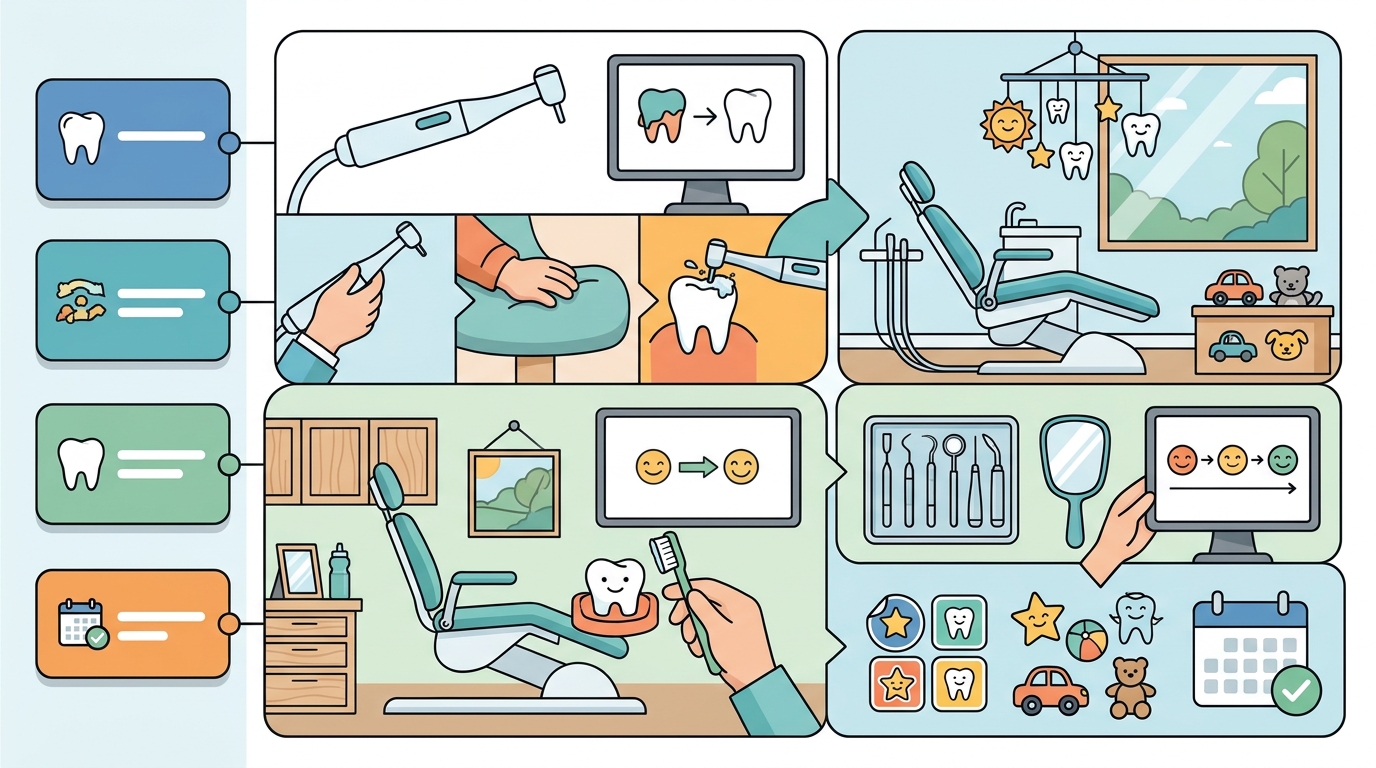
Effective communication is the cornerstone of pediatric behavior management. Dentists use a method known as the tell-show-do technique to demystify the process. This involves telling the child what is about to happen, showing them the instrument, and then performing the action slowly. This predictability reduces the fear of the unknown, which is a primary driver of dental anxiety in young patients.
The Tell-Show-Do Method
When a dentist explains a procedure, they use simple, non-threatening language. For example, instead of saying "I am going to drill your tooth," they might say, "I am going to use this little buzzer to clean the spot." This linguistic shift helps maintain the child's trust. At Tooth Doc Family Dentistry, Dr. Ahmad utilizes this approach to ensure children understand every step before it begins.
Another key strategy is positive reinforcement. Dentists reward cooperative behavior with stickers, small toys, or verbal praise. This creates a positive association with the dental office. When a child sees that good behavior leads to a reward, they are more likely to repeat that behavior in future visits.
Environmental Design and Sensory Comfort
The physical environment of a dental office plays a significant role in a child's comfort level. Modern pediatric dental practices are designed to be welcoming and less clinical. Bright colors, comfortable seating, and a calm atmosphere help lower a child's heart rate and reduce stress hormones. The goal is to make the office feel like a place of care rather than a place of fear.
Sensory-Friendly Spaces
Many offices, including Tooth Doc's Herndon office, incorporate sensory-friendly elements. This might include soft lighting, quiet music, or even sensory toys for children who are neurodivergent. These tools help children self-regulate their emotions. By providing a space where a child can feel safe and comfortable, the dentist can perform necessary care without the struggle of a frightened patient.
Parents also play a role in the environment. Dentists often encourage parents to stay calm and positive. A parent's anxiety can be contagious, so maintaining a relaxed demeanor helps the child feel secure. The dental team works with both the child and the parent to create a unified front of support.
Distraction and Cognitive Engagement
Distraction is a powerful tool for managing pain and anxiety. By focusing the child's attention on something else, the dentist can reduce their perception of discomfort. Common techniques include playing music, watching a video on a ceiling-mounted screen, or engaging in conversation about the child's interests. This cognitive engagement keeps the child's mind occupied and away from the sensations in their mouth.
Interactive Distraction Tools
Some dentists use interactive tools like tablets or games that the child can control. This gives the child a sense of agency and control. For instance, a child might be asked to "drive" a virtual car while the dentist works. This active participation keeps the child engaged and distracted from the procedure. At Tooth Doc Family Dentistry, the team uses various distraction methods tailored to the child's age and preferences.
Distraction is most effective when combined with other techniques. It works best when the child is already feeling somewhat safe and secure. By layering distraction with behavioral guidance and a calm environment, dentists can manage even the most anxious patients.
Sedation and Pharmacological Options
For children with severe anxiety or those who require extensive treatment, behavioral techniques alone may not be enough. In these cases, dentists may offer sedation options. Sedation dentistry involves the use of medication to help the child relax or sleep during the procedure. This is a safe and effective way to provide care for children who cannot tolerate traditional visits.
Types of Sedation
There are several types of sedation, ranging from mild to deep. Nitrous oxide, often called laughing gas, is a common option that helps children feel relaxed while remaining awake. Oral sedation involves giving a medication before the visit to help the child feel drowsy. For more complex cases, general anesthesia may be used, though this is typically performed in a hospital or specialized surgical center. Tooth Doc Family Dentistry offers sedation options for patients who need extra help managing their anxiety.
It is important to note that sedation is a last resort, not a first choice. Dentists always try to build a positive relationship with the child first. However, for children with a history of trauma or extreme fear, sedation can be a life-changing tool that allows them to receive the care they need.
Parental Involvement and Home Preparation
Parents are partners in their child's dental care. How a parent talks about the dentist at home can significantly impact the child's experience. Avoiding negative words like "pain" or "shot" and using neutral or positive language helps set the right tone. For example, saying "We are going to get your teeth cleaned" is much better than "We are going to have a tooth pulled."
Preparing for the Visit
Parents can also prepare their children by reading books about going to the dentist or playing pretend doctor at home. This familiarity helps reduce fear. On the day of the visit, parents should arrive on time and be calm. If a parent is rushed or stressed, the child will pick up on that energy. By being a calm and supportive presence, parents help their children feel safe. Tooth Doc Family Dentistry encourages parents to be involved in the process and to communicate openly with the dental team.
After the visit, it is important to praise the child for their bravery. This reinforces the positive experience and makes the next visit easier. By working together, parents and dentists can build a lifelong positive relationship with dental care.
Key Takeaways
- The tell-show-do technique is a fundamental method for reducing fear by making procedures predictable.
- Positive reinforcement, such as stickers and praise, helps create a positive association with dental visits.
- A calm, sensory-friendly environment lowers stress and helps children feel safe.
- Distraction techniques, like music or videos, help children focus on something other than the procedure.
- Sedation is an option for children with severe anxiety or those who need extensive treatment.
- Parents play a crucial role by using positive language and staying calm during the visit.
- Building a long-term relationship with a trusted dentist is the best way to manage dental anxiety.
Frequently Asked Questions
What is the tell-show-do technique?
The tell-show-do technique is a behavioral method where the dentist tells the child what will happen, shows them the instrument, and then performs the action. This helps reduce fear by making the process predictable.
Do dentists use sedation for nervous kids?
Yes, for children with severe anxiety or those who require extensive treatment, dentists may offer sedation options like nitrous oxide or oral sedation to help them relax.
How can parents help their child feel less nervous?
Parents can help by using positive language, staying calm, and preparing their child for the visit. Reading books about the dentist or playing pretend doctor at home can also help.
Is it okay for parents to stay in the room?
Yes, parents are often encouraged to stay in the room to provide comfort and support. However, they should remain calm and positive to avoid transferring their own anxiety to the child.
What if my child is extremely afraid of the dentist?
If your child is extremely afraid, talk to your dentist about sedation options. A specialist can help create a plan that ensures your child receives the care they need in a safe and comfortable way.
How can I find a pediatric dentist in Herndon?
You can find a pediatric dentist in Herndon by looking for a practice that specializes in children's care. Tooth Doc Family Dentistry is a local option that offers gentle care for kids of all ages.
Conclusion
Managing dental anxiety in children requires a combination of professional techniques and parental support. By using behavioral guidance, a calm environment, and distraction, dentists can create a positive experience for even the most nervous kids. At Tooth Doc Family Dentistry, we are committed to providing gentle, compassionate care that helps children build a lifelong positive relationship with their dental health. If you are looking for a pediatric dentist in Herndon who understands the needs of anxious children, we would be happy to help.