

Families generally prefer conservative preventive care because it preserves natural tooth structure and reduces long-term costs. However, restorative treatments become necessary when decay or damage progresses beyond what prevention can fix. This guide explains how to choose between these approaches, what to ask your dentist, and how to verify the best path for your family's oral health.
How to Choose the Right Approach
Choosing between conservative and restorative care depends on the severity of the dental issue. Conservative dentistry is a philosophy that prioritizes preserving as much natural tooth structure as possible. It focuses on prevention, minimally invasive treatments, and maintaining the health of the existing tooth. Restorative dentistry is the branch of dentistry that replaces missing or damaged tooth structure with artificial replacements like fillings, crowns, or implants.
A good option preserves the tooth's vitality and function. A bad option removes healthy tissue unnecessarily or delays necessary treatment until the problem worsens. At Tooth Doc Family Dentistry, Dr. Ahmad follows a conservative approach by design. She prefers to prevent problems rather than fix them, ensuring that if a tooth can be saved, it is.
Assessing the Severity
Early-stage cavities often require only a filling, which is a conservative restorative procedure. Advanced decay that reaches the nerve requires a root canal, which is a more invasive restorative procedure. The choice is not always binary; it is a spectrum of intervention levels.
What to Ask Before Committing
Patients should ask specific questions to ensure they understand the recommendation. Ask if the treatment is the least invasive option available. Ask what happens if you wait six months. Ask for a clear explanation of why a more aggressive treatment is necessary if one is recommended.
Dr. Ahmad explains findings in plain language and shows patients what she sees on X-rays or in the mirror. This transparency helps families make informed decisions without feeling pressured. A treatment plan should be a conversation, not a command.
How to Verify Credentials and Claims
Verifying a dentist's credentials ensures you are receiving care from a qualified professional. Check if the dentist is licensed by the Virginia State Board of Dentistry. Verify their education and any specialized training. Dr. Ahmad earned her Doctorate in Dental Medicine from Temple University’s Kornberg School of Dentistry in 2010.
You can also verify the practice's reputation through patient reviews and professional affiliations. Tooth Doc Family Dentistry is committed to community care and access to quality dentistry, shaped by Dr. Ahmad's experience serving underserved communities in North Philadelphia.
How the Treatment Process Works
The dental treatment process follows a logical sequence. It begins with a comprehensive examination and diagnostic imaging. The dentist evaluates the tooth's structure, nerve health, and surrounding bone. Based on these findings, a treatment plan is developed.
Conservative treatments are often completed in one visit. Restorative treatments like crowns or implants may require multiple visits over several months. For example, a dental implant involves placing a titanium post, waiting for osseointegration, and then attaching a crown. This process ensures long-term stability and function.
What It Costs and Price Drivers
Cost is a significant factor in dental decision-making. Conservative care is generally less expensive than extensive restorative work. A filling costs significantly less than a root canal and crown. Insurance coverage varies by plan, but preventive care is often covered at a higher percentage than restorative procedures.
At Tooth Doc Family Dentistry, the team verifies benefits and provides cost estimates before treatment begins. They accept most PPO plans, Medicaid, and Smiles for Children, ensuring accessible care for all families.
Common Mistakes to Avoid
One common mistake is delaying care due to fear or cost concerns. Waiting allows small problems to become large ones, increasing pain and expense. Another mistake is accepting a treatment plan without understanding the alternatives. Always ask for a second opinion if you are unsure.
Patients should also avoid ignoring symptoms. A persistent toothache or sensitivity is a signal that something needs attention. Early intervention is the key to preserving natural teeth.
Conservative vs. Restorative Alternatives
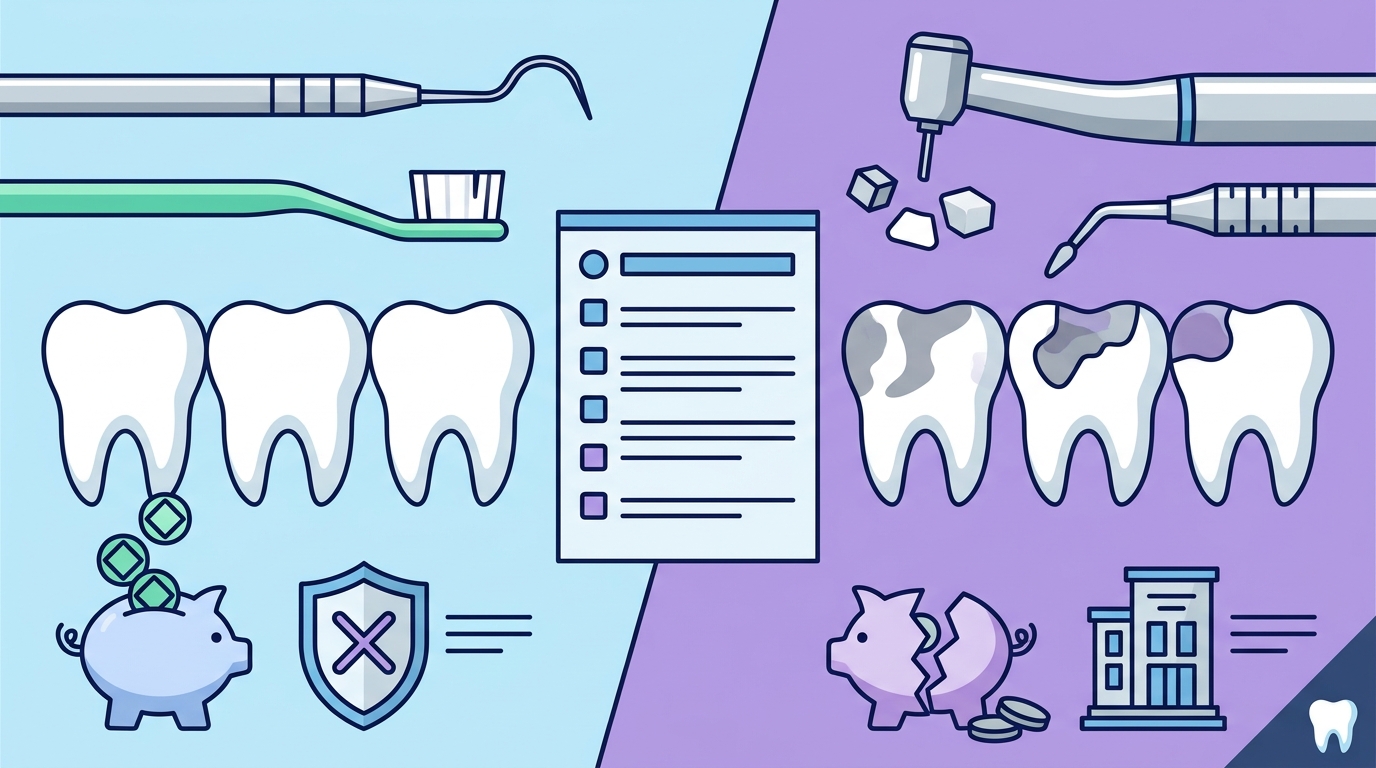
Conservative and restorative dentistry are not mutually exclusive; they are complementary. Conservative care aims to avoid the need for restorative work. When restorative work is needed, a conservative approach within restorative dentistry means using the least invasive method to restore the tooth.
| Feature | Conservative Care | Restorative Care |
|---|---|---|
| Goal | Preserve natural tooth | Replace damaged structure |
| Invasiveness | Low | Moderate to High |
| Cost | Lower | Higher |
| Longevity | Long-term health | Functional restoration |
Specific Family Situations
Dental needs vary by age and individual circumstances. For children, preventive care is the foundation. Sealants and fluoride treatments prevent cavities before they start. For adults, managing wear and tear is crucial. For seniors, preserving remaining teeth is vital for nutrition and quality of life.
At Tooth Doc Family Dentistry, Dr. Ahmad uses a "tell, show, do" approach for children, ensuring they feel comfortable and informed. This gentle method builds trust and reduces anxiety for the whole family.
Rules and Patient Protections
Patients have the right to informed consent. This means understanding the diagnosis, treatment options, risks, and costs before agreeing to any procedure. Dentists are bound by ethical codes that prioritize patient well-being and avoid unnecessary harm.
The American Dental Association’s Code of Ethics emphasizes the principle of nonmaleficence, or "do no harm." This principle guides dentists to choose treatments that offer the best outcome with the least risk.
Local Specifics for Herndon Families
Herndon, VA, offers a range of dental options, but accessibility and convenience matter. Tooth Doc Family Dentistry is located at 102 Elden St. Unit 11, Herndon, VA 20170. The office is easy to reach from Reston, Sterling, and surrounding areas. They are open Saturdays, making it easier for families to fit dental visits into busy schedules.
The practice serves a diverse community, including patients from Reston and Sterling. Dr. Ahmad's commitment to community care ensures that all residents have access to high-quality, gentle dentistry.
Timing and Long-Term Outcomes
Timing is critical in dental care. Early detection leads to simpler, less expensive treatments. Regular six-month checkups are the best way to catch problems early. If you have been away from the dentist for years, a return visit is a good place to start. The team at Tooth Doc is experienced in welcoming back patients who have been away for a long time.
Long-term outcomes depend on consistent care. Preventive habits at home, combined with professional care, lead to a lifetime of healthy smiles. Dr. Ahmad's conservative approach ensures that natural teeth are preserved for as long as possible.
Key Takeaways
- Conservative dentistry preserves natural tooth structure and is generally preferred for long-term health.
- Restorative dentistry is necessary when damage is too advanced for prevention alone.
- Always ask for the least invasive option and understand the alternatives.
- Verify your dentist's credentials and experience with your specific dental needs.
- Cost is a factor, but delaying care often leads to higher expenses and more pain.
- Regular checkups are the best way to maintain conservative care and avoid major restorative work.
- Choose a dentist who explains findings in plain language and respects your decisions.
- Local convenience, such as Saturday hours, can make consistent care easier for families.
Frequently Asked Questions
Is conservative dentistry always the best option?
Conservative dentistry is the best option when it can effectively treat the problem. However, if a tooth is severely damaged, restorative treatment may be necessary to save it or prevent further issues.
How do I know if I need a root canal?
A root canal is needed when decay or a crack reaches the tooth's pulp. Symptoms include severe pain, sensitivity to heat or cold, and swelling. A dentist can diagnose this with X-rays and clinical tests.
Does insurance cover conservative and restorative care?
Most insurance plans cover preventive care at a higher rate than restorative care. Coverage varies by plan, so it is important to verify your benefits before treatment.
Can I get a second opinion on a treatment plan?
Yes, you can always get a second opinion. It is a good idea if you are unsure about a recommended treatment or feel pressured to proceed.
How often should I visit the dentist?
Most dentists recommend a checkup and cleaning every six months. This frequency helps catch problems early and maintains oral health.
What is the difference between a filling and a crown?
A filling is used to repair a small cavity, while a crown covers the entire tooth to restore its shape and strength. Crowns are used when a tooth is more extensively damaged.